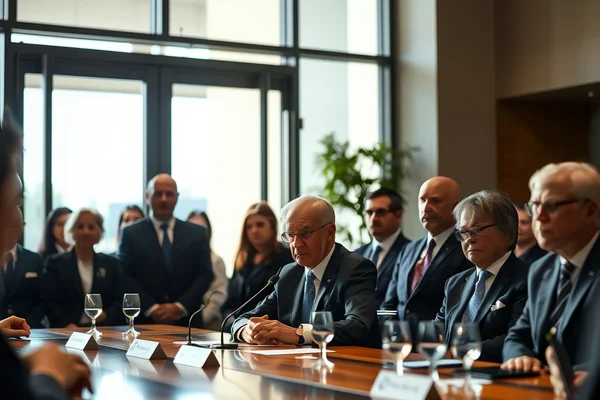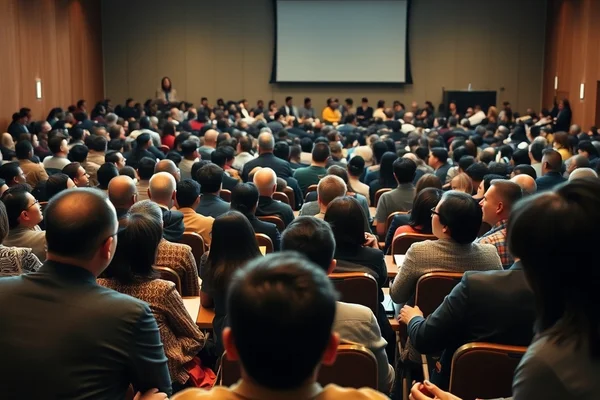
Around 420 K‑12 and higher‑education Chinese language educators gathered at the University of Rhode Island’s Kingston Campus from May 1‑3 for the CLTA‑USA Annual Conference, exploring AI‑enhanced teaching, study‑abroad impacts, and the future of Chinese language education in the United States.
The Chinese Language Teachers Association – USA (CLTA) convened its annual three‑day conference on the Kingston Campus of the University of Rhode Island (URI), drawing roughly 420 educators from K‑12 schools and universities worldwide. The event, held May 1‑3, 2026, served as a platform for teachers, program directors, and scholars to exchange research, discuss pedagogical innovations, and strengthen networks across the K‑16 spectrum.
The conference schedule featured workshops, panel discussions, individual presentations, and forums covering a wide range of topics:
Study‑abroad experiences – examining how immersion programs foster student growth and intercultural competence.
Artificial intelligence in the classroom – strategies for integrating AI tools into Chinese language instruction.
Historical perspectives – tracing the evolution of Chinese language education in the United States.
Advanced pedagogical pathways – innovative approaches for higher‑level language learners.
Media sentiment analysis – assessing American media attitudes toward the Chinese language.
Most sessions took place in the Center for Biotechnology and Life Sciences and Avedisian Hall, both located on URI’s Kingston Campus.
Two distinguished scholars delivered the conference’s keynote speeches. Agnes He of Stony Brook University presented “Language Learning as Development of Interactional Competence in an AI‑Mediated World,” highlighting how technology reshapes communicative skill acquisition. On the final day, Xun Yan from the University of Illinois Urbana‑Champaign discussed assessment practices for Chinese as a second language, offering a forward‑looking view of evaluation frameworks.
In addition to the keynotes, an invited colloquium led by URI’s Chinese Language Flagship Program director, Associate Professor Yu (Joyce) Wu, explored project‑based methods for building linguistic and intercultural competence within proficiency‑based curricula. A joint workshop by URI International Engineering Program Executive Director Sigrid Berka and Duke University’s Yan Liu examined the design of interdisciplinary, international language programs.
URI’s hosting of the conference provided a venue for local educators from Rhode Island, Massachusetts, and Connecticut to connect with national peers. Wu emphasized the potential for the event to raise the profile of Chinese language programs in New England schools, noting the vibrant Chinese immigrant community in nearby Pawtucket as a resource for shared best practices.
Beyond the academic sessions, the conference included a CLTA board meeting (May 1, 7–10 p.m.) at the Hampton Inn in South Kingstown and a complimentary excursion to Newport’s Cliff Walk (May 1, 4:30–6:30 p.m.). Attendees also enjoyed catered lunches and tea throughout the weekend.
The CLTA‑USA Annual Conference at URI underscored the growing complexity of Chinese language education in an increasingly digital and globalized context. By bringing together teachers, program directors, and researchers, the gathering highlighted both the challenges—such as integrating AI responsibly—and the opportunities for expanding Chinese language instruction across K‑16 pathways.
For a complete schedule and additional details, interested parties can consult the CLTA website.