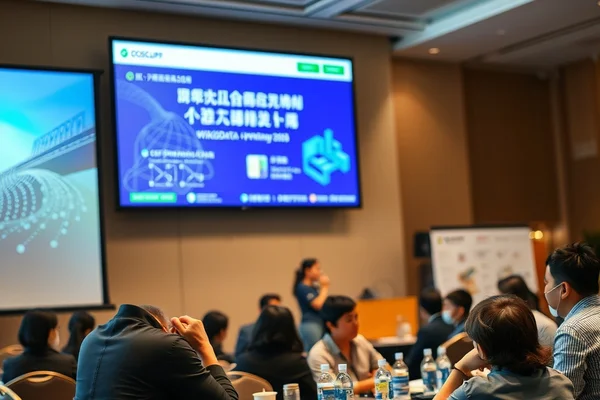
The first‑ever Evertiq Expo in Zürich gathered over three hundred professionals from more than two hundred companies to discuss the shifting dynamics of the global electronics supply chain, the evolving memory market, and data‑driven perspectives on semiconductor growth.
On 23 April 2026, Zürich hosted the debut edition of the Evertiq Expo, a one‑day gathering that brought together 341 participants representing 212 companies from across the Swiss electronics ecosystem. The event combined a compact tabletop exhibition with a conference program that deliberately avoided a single thematic focus, opting instead to explore the intersecting forces reshaping the industry today.
Dieter Weiss of in4ma opened the stage with a forward‑looking assessment of the global Electronics Manufacturing Services (EMS) sector for 2025. Contrary to expectations of a European rebound, Weiss highlighted a stagnating market in the region, while EMS providers in the Far East and Southeast Asia posted double‑digit growth rates. The disparity underscores a growing regional imbalance that could influence sourcing strategies and investment decisions for European OEMs in the coming years.
Nikolaos Florous from Memphis Electronic turned the discussion to memory technologies, arguing that the sector is moving away from its historically cyclical behavior. He identified three converging drivers: the expanding computational demands of artificial intelligence, geopolitical realignments that reshape supply routes, and a heightened capital intensity required for next‑generation memory production. The result, according to Florous, is a paradoxical shortage—both legacy and advanced memory chips are scarce, but for fundamentally different reasons. This dual pressure may accelerate diversification of memory portfolios and spur new collaborations across the supply chain.
Adding a quantitative lens, Claus Aasholm of Semiconductor Business Intelligence presented an analysis that challenges prevailing narratives about semiconductor growth. By digging into capacity expansion metrics, investment flows, and policy‑induced supply‑chain shifts, Aasholm illustrated where genuine expansion is occurring versus where headline‑grabbing announcements may mask underlying constraints. His findings suggest that while certain regions announce ambitious fab projects, actual capacity utilization and long‑term investment sustainability remain uneven.
The three presentations collectively painted a picture of an industry at a crossroads: regional imbalances in EMS, a memory market strained by divergent demand vectors, and semiconductor growth that is more nuanced than headline numbers suggest. For attendees, the value lay not only in the data presented but also in the networking opportunities that allowed for immediate exchange of ideas and potential partnerships.
A curated selection of photographs captured the atmosphere of the inaugural expo—informal meetings at the exhibition tables, animated panel discussions, and spontaneous conversations in the hallways. These images, now archived on the Evertiq website, convey the collaborative spirit that the organizers aimed to foster.
Looking ahead
Evertiq plans to return to Zürich on 22 April 2027, promising another platform for industry stakeholders to dissect emerging challenges and opportunities. While the 2026 edition set the tone, future expos will likely deepen the focus on specific technological fronts as the electronics landscape continues to evolve.