Researchers, industry leaders, policymakers and students gathered at Rice University’s Baker Institute to explore sustainability through a systems‑level lens, highlighting the interplay of social, economic and environmental pillars and the emerging partnership with the University of Houston on plastics circularity.
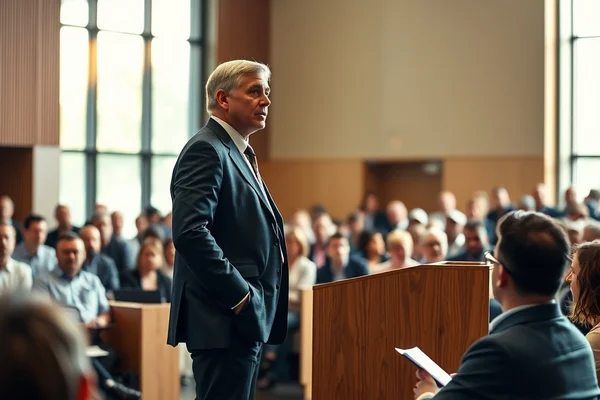
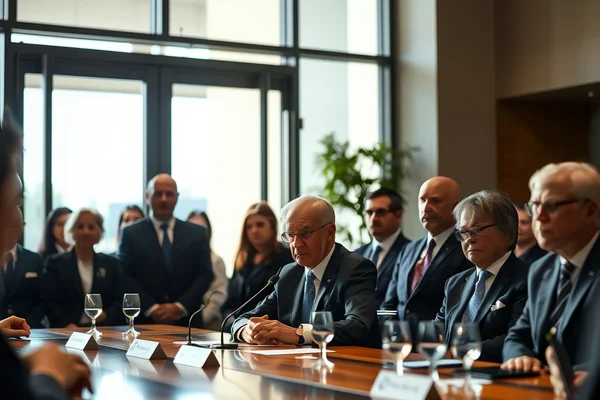
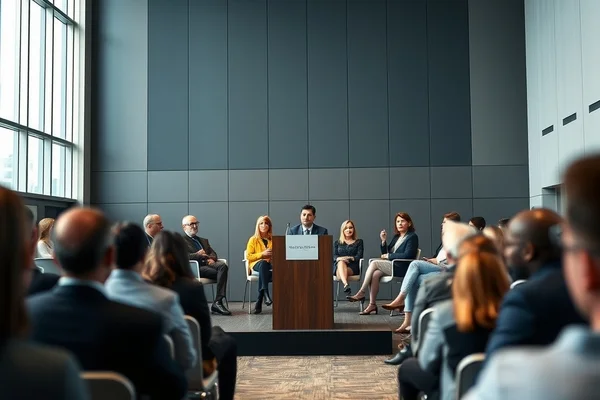
The Center for Energy Studies (CES) at Rice University’s Baker Institute for Public Policy hosted its annual Sustainability Summit on April 28, 2026, framing the discussion around “systems thinking” as a prerequisite for tackling the intertwined challenges of today’s sustainability agenda.
CES deputy director and energy‑sustainability fellow Rachel Meidl opened the summit by stressing that sustainability cannot be reduced to isolated goals. “We look at entire systems,” she said, noting that the conventional Sustainable Development Goals (SDGs) often lack clarity about priority and interaction. Meidl likened the concept to a three‑legged stool—social, economic and environmental factors—that must be balanced for the structure to stand. This metaphor underpins CES’s argument that a systems‑level perspective should serve as a guiding framework for policy, research and industry initiatives.
Rice President Reginald DesRoches echoed the sentiment, linking the summit to the university’s strategic plan, Momentous: Personalized Scale for Global Impact. He highlighted the institute’s tradition of merging rigorous scholarship with real‑world impact, emphasizing that solutions to sustainability must be crafted “across boundaries, across disciplines, across sectors and across communities.”
A key feature of the summit was the announcement of a new memorandum of understanding between CES and the University of Houston’s Energy Transition Institute. The agreement formalizes a collaborative effort to develop scalable solutions for plastics circularity, building on existing work within the Recycling Science Council. Meidl described the partnership as a shift from competition to complementary strengths, noting that both institutions share “crossover interests” in advanced recycling, circular economy models and broader sustainability research.
Graduate students from Rice and the University of Houston presented their work in a poster session, engaging industry representatives in dialogue about emerging sustainability topics. The session illustrated how early‑career scholars are applying systems thinking to concrete problems—from renewable energy integration to resilient infrastructure design.
In line with the summit’s theme, the venue featured a certified e‑waste recycler, RAKI, offering attendees a convenient way to dispose of electronic devices responsibly. The presence of on‑site recycling reinforced the event’s commitment to translating discussion into action.
CES continues to provide data‑driven analysis of the economic, policy and regulatory forces shaping energy markets. While the summit highlighted ongoing research and new collaborations, it also underscored the need for sustained, interdisciplinary effort to address the complex, interdependent challenges that define sustainability in the 21st century.
For more information on CES’s research programs and expert commentary, visit the Center for Energy Studies website.