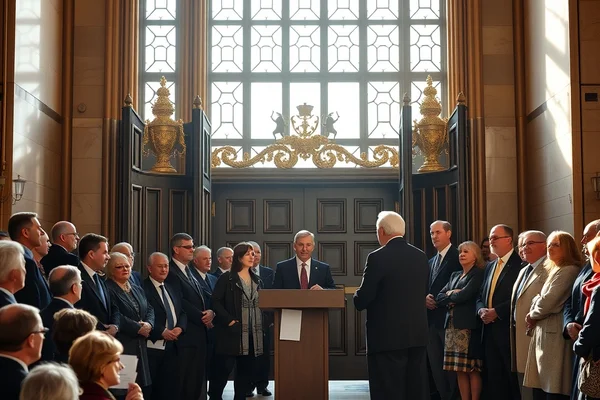
On 28 April 2026, the Palace of Westminster hosted a high‑level conference bringing together British MPs, legal scholars and human‑rights advocates to discuss Iran’s “wartime position,” the country’s use of capital punishment, and pathways toward a democratic future.
The “Iran: Towards Peace and Freedom” conference, held on 28 April 2026 at the Palace of Westminster, assembled a cross‑party group of UK parliamentarians, international law experts, and representatives from global human‑rights organisations. The gathering was convened in response to a series of recent developments in the Islamic Republic, notably the adoption of a self‑described “wartime position” by Tehran’s leadership and a surge in executions that have drawn condemnation from the United Nations and European bodies.
| Theme | Highlights |
|---|---|
| Iran’s “wartime position” | Speakers examined the legal and diplomatic implications of Iran’s claim of a state of war, noting how it has been used to justify heightened security measures, curtail civil liberties and intensify repression of dissent. |
| Capital punishment | A panel of human‑rights lawyers presented data showing that Iran continues to rank among the world’s leading executors, with a particular focus on the execution of political prisoners and members of opposition groups. Calls were made for the UK to strengthen sanctions targeting officials responsible for death‑penalty cases. |
| Democratic transition | Delegates explored the role of the National Council of Resistance of Iran (NCRI) and other opposition movements in shaping a post‑regime political framework. While acknowledging the NCRI’s advocacy for a secular, democratic Iran, speakers stressed the need for inclusive dialogue that respects the aspirations of all Iranian citizens. |
| International cooperation | The conference underscored the importance of coordinated action among Western parliaments, the European Union, and multilateral institutions to pressure Tehran on human‑rights violations while offering diplomatic pathways for reform. |
Several MPs, including members of the Foreign Affairs Committee and the All‑Party Parliamentary Group on Human Rights, issued a joint statement urging the UK government to:
Accelerate investigations into alleged war crimes and extrajudicial killings in Iran.
Expand targeted sanctions against Iranian officials and entities directly involved in the administration of the death penalty.
Support civil‑society initiatives that promote democratic governance and protect the rights of women, minorities, and political activists.
The statement also welcomed the work of NGOs that document abuses and called for the UK to act as a conduit for asylum seekers fleeing persecution.
Iran’s recent “wartime” rhetoric follows a period of heightened regional tension, including proxy conflicts in the Middle East and a renewed focus on its nuclear program. Human‑rights organisations have warned that such language often precedes crackdowns on dissent, as seen in the aftermath of the 2022 nationwide protests. The execution of political prisoners—particularly members of opposition groups such as the People’s Mojahedin Organization of Iran (PMOI)—has intensified calls for international accountability.
The Westminster conference concluded with a pledge to convene a follow‑up meeting within the next twelve months, aiming to monitor Iran’s compliance with international human‑rights standards and to assess the impact of any newly imposed sanctions. Participants emphasized that sustained diplomatic pressure, combined with support for democratic actors inside Iran, remains essential for any lasting peace and freedom in the region.
The article reflects the content and tone of the original conference report while maintaining an objective, non‑promotional perspective.